A look inside my IEA experience — the teammates, the coaches, and the seasons that shaped how I compete and how I show up for the people riding alongside me.
IEA riding is different from showing on your own horse — you draw a mount you've likely never met, warm up for a few minutes, and go. What makes it work is the team around you: teammates who scout the horse's quirks ringside, coaches who talk you through a plan in sixty seconds, and the shared understanding that a bad trip isn't a solo failure.
I joined Eastern CT IEA to compete beyond individual shows and be part of something bigger than my own scoresheet. Over three seasons, the team has become less about who's on the roster and more about how we prepare each other — walking a course together, comparing notes on a horse's stop side, cheering from the rail as loud for a teammate's trip as our own.
Our group spans multiple grade levels and experience levels, which means practices double as mentorship — newer riders learn the format from veterans, and veterans stay sharp by explaining fundamentals out loud. That exchange is where most of the real growth happens.
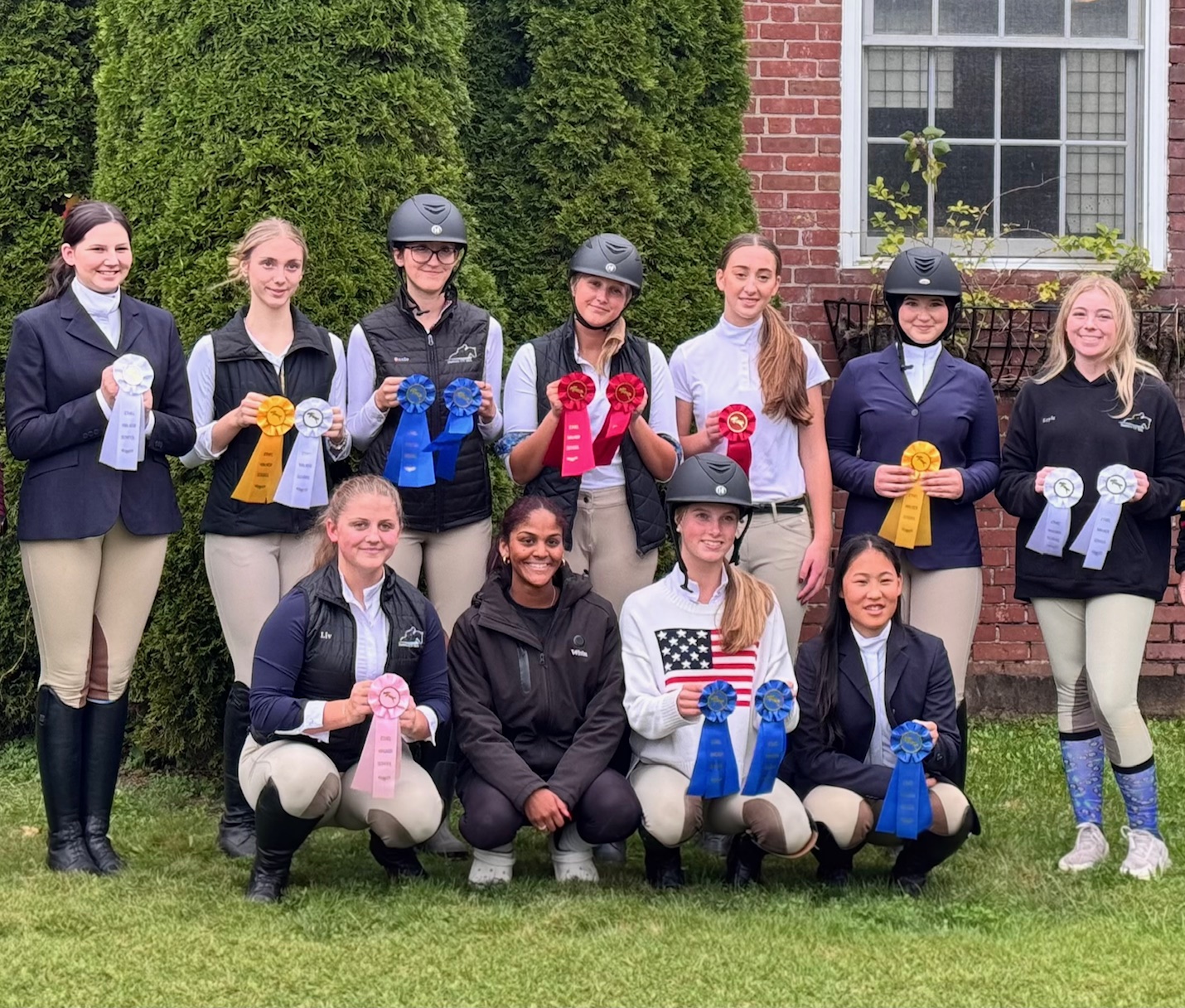
A look at team and individual milestones from three seasons of IEA competition, alongside the goals driving the next one.
Qualified for regionals in JV Beginner on the Flat during the 2024–2025 season.
Push for a Zone Finals qualification in the next eligible division.
Consistent placings across three seasons, building a reliable record on unfamiliar horses.
Continue progressing through IEA levels as skills and experience build.
Recognized in my first IEA season for teammate support on and off the rail.
Take a more active role helping first-year riders learn the catch-ride format.
Reliable scoring across flat and fences classes has helped the team's standing each season.
Contribute to a stronger overall team finish at Regionals this season.
Catch-riding unfamiliar horses under time pressure teaches lessons an individual show never quite can.
What a new horse and one shot at the course demand.
You don't get to build a relationship with the horse beforehand. Reading a new mount in minutes has made me a quieter, more responsive rider everywhere.
A short warm-up and one shot at the course means nerves have to take a back seat. I've learned to reset fast and ride the plan, not the panic.
A rough trip on a strange horse isn't a reflection of your riding — it's data. IEA has made me far less precious about a single bad round.
What changes when every trip counts toward a team score.
Every trip counts toward a team score. That shifted how I show up — preparation and attitude affect more than just me.
The rider before you often has the best intel on a horse. Learning to actually use that information, fast, is its own skill.
A minute-long plan from Kathy or Shannon before you enter the ring only works if you can take it in and execute immediately.
Snapshots from IEA meets, warm-ups, and team moments throughout the season — swap in real images as new content comes in.
Open to hearing from coaches, programs, and collaborators. Reach out by email, or follow along on TikTok and Instagram.
tarynvarney01@gmail.com